CapCut Export Quality: Why 1080p Looks Worse Than Your Phone Recording
CapCut's default export reduces quality more than most users notice. Here's how to set bitrate, resolution, and codec to match your iPhone or Galaxy source.
ConvertIntoMP4 Team·May 8, 2026·9 min read
Why Your Edited Video Looks Worse Than the Source
You shot 4K HDR on iPhone 15 Pro. Edited a one-minute clip in CapCut. Exported. The output looks softer than the original. Compression artifacts in skin tones. Colors slightly muted compared to what you saw in CapCut's preview.
This isn't a CapCut bug. It's the export defaults. CapCut's free version optimizes for upload speed over quality. The defaults trade visual quality for smaller files, which is fine for most TikTok work but bad for content that competes on craft.
This post covers CapCut export settings that preserve source quality, the codec choices that work across platforms, and the quirks that lose detail in skin tones, fast motion, and dark scenes.
There are several CapCut versions in 2026 with different export options:
Version
Platform
Max resolution
Watermark
CapCut Mobile (free)
iOS, Android
4K 60fps
None on free 2026+
CapCut Pro
iOS, Android
4K 60fps + Pro effects
None
CapCut for PC
Windows, Mac
4K 60fps
None
CapCut Web
Browser
1080p (free), 4K (paid)
None on paid
The free mobile and PC versions have similar export options. Web has fewer.
Default Export Quality Loss
CapCut's "Recommended" export setting on mobile (as of 2026):
Resolution: source resolution (good)
Bitrate: 8-12 Mbps for 1080p (lower than ideal)
Codec: H.264 8-bit (compatibility, not quality)
Frame rate: source rate
The bitrate is the issue. iPhone 15 Pro records 4K at ~85 Mbps. CapCut defaults output 4K at ~25 Mbps. That's about 30% of source bitrate, which causes visible re-encoding artifacts.
For platforms that re-encode anyway (TikTok, Instagram), the lower bitrate is acceptable because the platform compresses further. For YouTube uploads, archival, or any "looks good full screen" use case, bump the bitrate up.
Settings That Preserve Quality
In CapCut Mobile, after editing:
Tap "Export" (top right)
Tap "Resolution" > pick source-matching resolution (don't downscale)
Tap "Frame Rate" > match source (typically 30 or 60)
Tap "Bitrate" > "Higher" or "Highest"
Tap "Codec" > "H.264" for compatibility, "H.265" for size
CapCut PC has similar options under "Export Settings."
Source quality
CapCut export setting
Resulting bitrate
iPhone 4K HEVC ~85 Mbps
Highest, H.265
~50 Mbps
iPhone 1080p H.264 ~25 Mbps
Higher, H.264
~16 Mbps
Android 4K H.265 ~50 Mbps
Highest, H.265
~35 Mbps
Galaxy S24 8K ~100 Mbps
Highest, H.265
~70 Mbps
The "Higher" and "Highest" settings produce visibly cleaner output than "Recommended." Files are 2-3x larger but the quality difference is real.
When to Use H.264 vs H.265
CapCut offers both codecs. The trade-offs:
H.264 (default on mobile):
Universal playback (every device, every browser)
Larger files (1.5-2x H.265 at same quality)
Faster encoding (especially on older phones)
H.265 (HEVC, available on most platforms):
~50% smaller files at the same quality
Limited playback on older Windows machines and email clients
Slower encoding (especially on older phones)
For TikTok and Instagram delivery: either works (platforms re-encode). For email or older device sharing: H.264. For YouTube and modern devices: H.265.
iPhone 15 Pro Dolby Vision source: imports as flat-looking SDR. Apply CapCut's "HDR" filter to compensate, or pre-convert to SDR before importing.
iPhone 14+ HDR10 source: similar flat appearance. Same fix.
Galaxy S24 HDR10+ source: imports correctly on PC, hit-or-miss on mobile.
For HDR-heavy projects, convert source to SDR Rec.709 before importing to CapCut. See HDR10 vs Dolby Vision Conversion for the conversion workflow.
The alternative: edit the HDR source as-is, export, then tone-map the output to SDR using FFmpeg or our video converter.
Frame Rate Mismatch Issues
If your source is 60 fps and you export at 30 fps in CapCut, the engine drops every other frame. The result is choppy motion in fast-action scenes.
To avoid: match export frame rate to source frame rate. If your source is mixed (some 60 fps, some 30 fps), edit on a 60 fps timeline so the 30 fps clips are duplicated rather than the 60 fps clips dropped.
For social platforms, 30 fps is fine and saves file size. For sports or high-motion content, keep 60 fps through to delivery.
For email attachments under 25 MB, plan around 4-6 Mbps for 60-second video. For larger sharing services (WeTransfer, Drive), use higher bitrate.
Pro Tip: Export the highest-quality version first as a master, then re-encode smaller copies for specific destinations. Re-encoding from a high-bitrate source produces better results than exporting the same content multiple times.
Watermarks and the 2026 Update
CapCut had a "Made with CapCut" watermark on free exports in 2023 and earlier. The 2026 versions removed this on free tiers (as long as you don't use specific Pro features). Verify your export doesn't have a watermark before publishing.
For watermark removal of older CapCut exports: re-export through CapCut's current version, or crop the watermark area in our video crop tool (lossy because it requires re-encoding the cropped area).
Common Issues
Export takes much longer than the video duration: H.265 encoding on older phones is CPU-bound. Switch to H.264 for faster export, or upgrade hardware.
Audio out of sync after export: known CapCut issue with mixed-frame-rate timelines. Conform clips to a consistent frame rate before edit, or re-mux the output through FFmpeg.
Export fails with "Insufficient storage": phone storage low. CapCut needs roughly 2-3x the source file size as scratch space during export.
Quality drops on long videos (10+ minutes): CapCut's bitrate scaling on long-form content is aggressive. Export shorter clips and concatenate, or use a desktop NLE for long-form work.
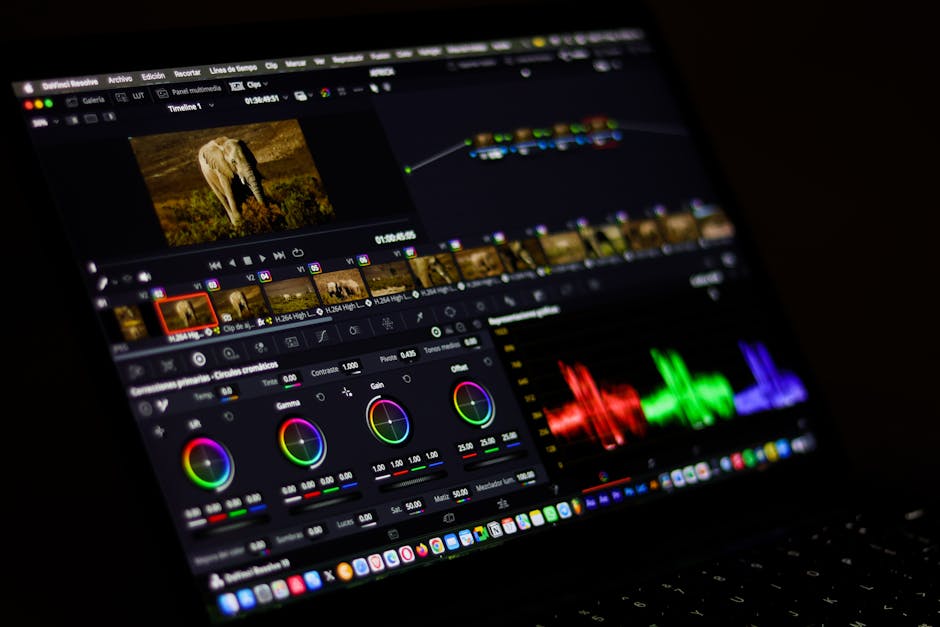
Color shift after export: CapCut's color management is uneven. For color-critical work, color-grade in CapCut, export, then verify in a separate player. Re-grade in DaVinci Resolve if needed.
CapCut Web vs Mobile vs PC
For best export quality:
PC (Windows / Mac): most options, fastest hardware encoding, best for long-form
Mobile: convenient, encoder is hardware-bound (good on flagship phones, slow on older devices)
Web: convenient, server-side encoding, less control over settings, free tier limited to 1080p
For polished final delivery: PC. For social-quick-edit: mobile. For browser-only setups: web with a paid plan to access 4K.
For CapCut on Linux: not officially supported. Use Kdenlive instead. See Kdenlive Export Presets.
Workflow With Other Tools
CapCut is a fine quick-edit tool. For more control or specific needs, consider re-exporting the master from CapCut and refining elsewhere:
Color grading: export from CapCut, grade in DaVinci Resolve Free
Compression: export from CapCut at "Highest," then re-encode through our video compressor to specific targets
Frequently Asked Questions
Why is my CapCut export only 1080p when source is 4K?
The export resolution dropdown is set to 1080p. Change to 4K. If 4K isn't an option, you may be on CapCut Web free tier (limited to 1080p) or your source clips were imported at lower resolution.
Can I export to ProRes from CapCut?
Not directly. CapCut exports H.264 and H.265 in MP4 only. For ProRes, use DaVinci Resolve or convert via FFmpeg. See Apple ProRes Windows Workflow.
Does CapCut support 8K export?
CapCut PC supports 8K timeline and export. CapCut Mobile supports 4K maximum on most devices. Galaxy S24 Ultra and iPhone 15 Pro Max can output 4K reliably; other phones may struggle.
How do I keep my export from looking compressed?
Set bitrate to "Highest." Use H.265 (smaller files at same quality). Match resolution to source. Don't reduce frame rate from source. These four steps preserve quality.
Can CapCut export multi-channel audio?
CapCut exports stereo by default. Mono and 5.1 surround are not supported in mobile. PC version has more audio options.
What's the maximum CapCut export bitrate?
For 4K H.264: ~80 Mbps. For 4K H.265: ~50 Mbps. These ceilings are based on the encoder integrated into CapCut. For higher bitrate, export at a lower resolution and re-encode externally.
For CapCut exports that match source quality: pick "Higher" or "Highest" bitrate, match source resolution and frame rate, use H.265 if your destination supports it, H.264 for broader compatibility. Color-grade and master audio externally for important work. Our video compressor and video crop tool handle the post-CapCut steps if you need finer control over compression.
CapCutvideo editingmobileexport qualitybitrate
About the Author
ConvertIntoMP4 Team
The ConvertIntoMP4 editorial team — engineers, designers, and media specialists building the fastest free file converter on the web.