The codec inside the MOV container matters far more than the container itself. Here are the common codec choices when converting from MP4:
| Codec | Quality | File Size | Use Case |
|---|
| ProRes 422 Proxy | Good | ~45 GB/hr at 1080p | Offline editing |
| ProRes 422 LT | Very good | ~100 GB/hr at 1080p | Standard editing |
| ProRes 422 | Excellent | ~150 GB/hr at 1080p | Broadcast master |
| ProRes 422 HQ | Near-lossless | ~220 GB/hr at 1080p | Color grading master |
| ProRes 4444 | Lossless + alpha | ~330 GB/hr at 1080p | VFX, compositing |
| H.264 | Excellent | ~5-15 GB/hr at 1080p | Distribution, web |
| HEVC (H.265) | Excellent | ~3-10 GB/hr at 1080p | Modern Apple devices |
| DNxHR | Excellent | Similar to ProRes | Cross-platform editing |
For editing workflows, convert to ProRes 422 or ProRes 422 HQ. The much larger file sizes are the tradeoff for frame-accurate editing performance — every frame is independently encoded, so scrubbing and seeking are instant.
For distribution and playback, H.264 or HEVC inside MOV is typically sufficient. This is a lightweight container swap without re-encoding quality loss.
The codec you choose depends entirely on your goal:
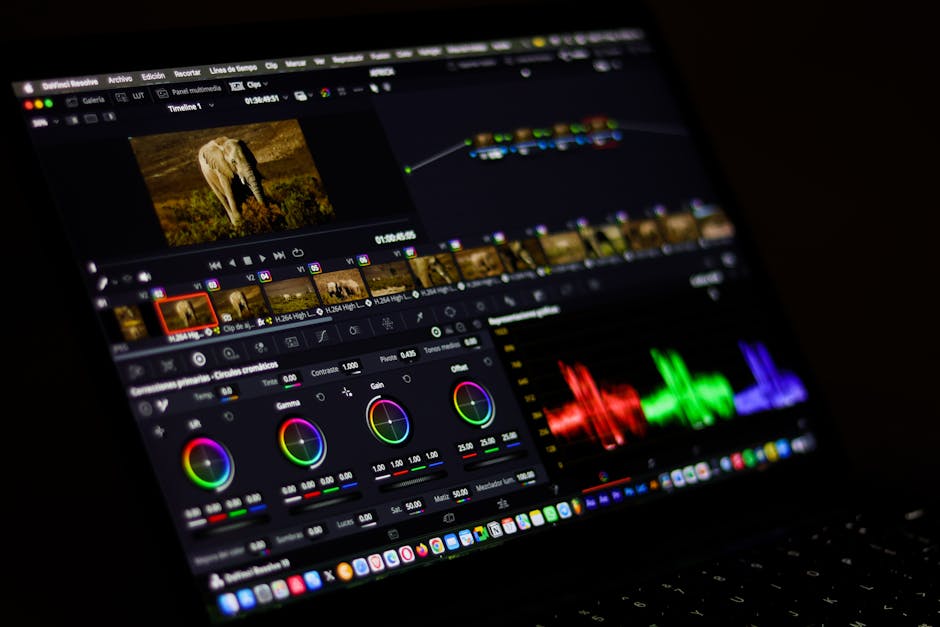
- Editing in Final Cut Pro / DaVinci Resolve — ProRes 422 or ProRes 422 HQ
- Simple playback on Apple devices — H.264 (stream copy, no quality loss)
- iPhone/iPad optimization — HEVC for newer devices, H.264 for older ones
- Broadcast delivery — ProRes 422 HQ at the source resolution and frame rate
- VFX compositing — ProRes 4444 (preserves alpha channel)
For ProRes conversion, quality is determined by the ProRes variant (Proxy through 4444), not by a CRF or bitrate value. ProRes uses a fixed quality target per variant — you choose the variant and the codec handles the rest.
For H.264/HEVC in MOV, use the same CRF values as you would for MP4:
- CRF 18-20 for high quality
- CRF 22-24 for balanced quality/size
- CRF 26-28 for smaller files
MOV supports multiple audio codecs:
- AAC at 256 kbps — Standard for distribution
- PCM (uncompressed) at 24-bit/48 kHz — Standard for editing
- ALAC — Apple's lossless codec, good for music-heavy content
For editing workflows, PCM audio avoids any generational quality loss during edit operations. For distribution, AAC at 256 kbps is transparent quality and universally supported.
Upload your MP4 to our MP4 to MOV converter and select your target codec and quality level. For stream copy (H.264 to H.264 without re-encoding), the conversion is nearly instant since only the container changes.
Stream copy vs. re-encode. If your source MP4 contains H.264 or HEVC and you just need a MOV container for Apple compatibility, a stream copy avoids re-encoding entirely. The video and audio bitstreams are copied directly into the MOV container with zero quality loss and near-instant processing. This is the fastest and highest-quality option when codec conversion is not needed.
Color space matters for ProRes. ProRes 422 supports Rec. 709 (HD) and Rec. 2020 (HDR) color spaces. When converting HDR MP4 content (10-bit HEVC with Rec. 2020) to ProRes, ensure the color space metadata transfers correctly. Incorrect color space tagging causes washed-out or oversaturated colors in the NLE timeline.
Resolution and frame rate. Always match the source unless you have a specific reason to change them. Converting 4K to ProRes 422 HQ produces enormous files (800+ GB/hr). For a comprehensive treatment of resolution handling, see our 4K video conversion guide.
MOV vs MP4 for YouTube. YouTube accepts both and processes them identically. There is no advantage to uploading MOV over MP4 to YouTube — in fact, MP4 is slightly preferred because the upload is faster (smaller files at equivalent quality). For YouTube-specific settings, check our best video settings for YouTube guide.
Final Cut Pro says "incompatible media." This usually means the codec inside the MOV is not one Final Cut expects. H.264 in MOV works, but some exotic codecs (VP9, FFV1, Theora) inside MOV are not recognized. Convert using ProRes or H.264 for guaranteed Final Cut compatibility.
File size exploded after conversion. If you converted from H.264 MP4 to ProRes MOV, this is expected. ProRes is an editing codec designed for quality and performance, not compression. A 1 GB H.264 file becomes 10-30 GB in ProRes 422 HQ. This is normal and intentional.
Colors look different in QuickTime Player. QuickTime applies color management that other players do not. A file that looks correct in VLC may appear brighter or more saturated in QuickTime. This is a display issue, not a conversion error. The underlying data is identical. For professional work, always evaluate color in your NLE (Final Cut, Resolve), not in QuickTime Player.
Audio out of sync after conversion. Variable frame rate (VFR) sources — common from screen recording apps and smartphones — can cause audio drift when converted to constant frame rate MOV. Force constant frame rate (CFR) during conversion to fix this. Our converter detects VFR sources and handles the conversion automatically.
MOV file won't play on Windows. Windows does not include MOV/QuickTime codecs by default. Install the K-Lite Codec Pack or use VLC for playback. For cross-platform delivery, MP4 is always the safer choice. See the MOV to MP4 conversion guide if you need the reverse direction.
Converting MP4 to MOV makes sense primarily for Apple-centric editing workflows (Final Cut Pro, iMovie) and professional delivery in ProRes. For simple playback on Apple devices, a stream copy (H.264 in MOV) is the fastest option with zero quality loss. For editing, ProRes 422 or ProRes 422 HQ inside MOV gives you the best timeline performance and compatibility with Apple's professional tools.
Ready to convert? Try our free MP4 to MOV converter — no registration required.