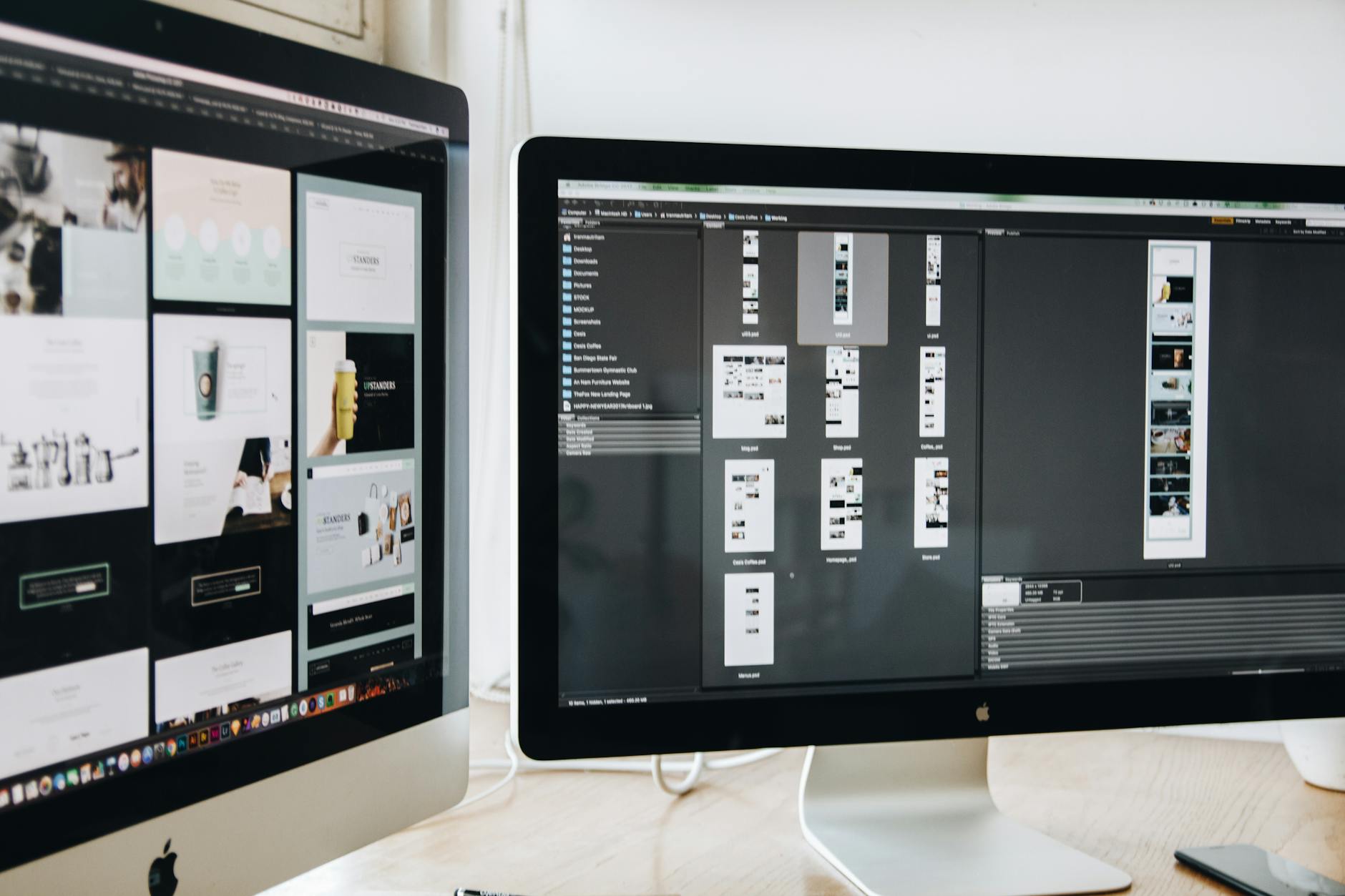
Learn how to convert Photoshop PSD files to JPG without Adobe software. Free methods using online converters, GIMP, command-line tools, and batch processing for designers and non-designers.
Someone sends you a PSD file. Maybe it is a design mockup from a freelancer, a logo from a graphic designer, marketing materials from a brand team, or an old Photoshop project you need to reference. You open it and... nothing happens. Your computer does not know what to do with it because you do not have Adobe Photoshop installed. Or perhaps you have Photoshop but you need to convert hundreds of PSD files and doing them one at a time is impractical.
PSD (Photoshop Document) is Adobe's proprietary layered image format. It preserves layers, masks, adjustment layers, text, vector shapes, and all of Photoshop's editing data. This makes PSD files large and complex — and incompatible with most applications outside the Adobe ecosystem. If you need to share the image, upload it to a website, include it in a document, or simply view it, you need to convert it to a universal format like JPG.
This guide covers every practical method for converting PSD to JPG without Photoshop — from free online tools to command-line solutions for batch processing, with attention to quality settings, layer handling, and the specific challenges that PSD files present.
PSD to JPG conversion without Photoshop
Understanding PSD vs. JPG
Feature
PSD (Photoshop Document)
JPG (JPEG)
Layers
Yes (unlimited)
No (single flattened image)
Transparency
Yes (alpha channel)
No
Color Modes
RGB, CMYK, Lab, Grayscale, etc.
RGB and Grayscale only
Bit Depth
8, 16, or 32-bit per channel
8-bit per channel
Compression
Lossless (RLE) or None
Lossy (DCT-based)
Typical File Size
10 MB - 2 GB+
100 KB - 10 MB
Max Dimensions
300,000 x 300,000 px
65,535 x 65,535 px
Text/Vectors
Preserved as editable objects
Rasterized (not editable)
Web Compatibility
Not supported by browsers
Universal
Print Compatibility
Professional prepress
Universal
What Happens During Conversion
Converting PSD to JPG involves several transformations:
Layer flattening: All layers are merged into a single image. Hidden layers are discarded.
Color mode conversion: If the PSD is in CMYK (print) color mode, it is converted to RGB (screen) color mode. This can cause slight color shifts.
Bit depth reduction: 16-bit or 32-bit channels are reduced to 8-bit.
Transparency removal: Since JPG does not support transparency, any transparent areas are filled with a background color (usually white).
Lossy compression: The flattened image is compressed using JPEG's DCT algorithm, introducing some quality loss depending on the quality setting.
Understanding these transformations helps you set the right options for your conversion and avoid unexpected results.
Method 1: Online Converter (Fastest)
Our image compressor and converter handles PSD to JPG conversion directly in your browser with no software installation required.
Go to the converter page
Upload your PSD file (drag and drop or click to browse)
Select JPG as the output format
Choose your quality setting (80-95% recommended for most uses)
Click Convert and download your JPG
This method works on any operating system — Windows, macOS, Linux, ChromeOS — and processes the file in the browser without uploading it to a server. For batch conversion, upload multiple PSD files at once.
Method 2: GIMP (Free, Cross-Platform)
GIMP (GNU Image Manipulation Program) is a free, open-source image editor that reads PSD files and exports to JPG.
Step-by-Step in GIMP
Open the PSD file: File > Open > select your .psd file
GIMP imports the layers. If prompted about color profile, choose "Keep" to preserve the original colors.
Flatten the image: Image > Flatten Image (this merges all visible layers)
Export as JPG: File > Export As > change the file extension to .jpg
Set quality: In the export dialog, set the quality slider (85 is a good default)
Click Export
GIMP PSD Import Limitations
GIMP handles most PSD features but has some limitations:
Adjustment layers: May not render identically to Photoshop
Smart objects: Rasterized (the embedded object is not available)
Layer effects (drop shadows, outer glows): May differ from Photoshop's rendering
Text layers: Preserved as text if fonts are available; rasterized otherwise
CMYK files: Converted to RGB (may cause slight color shifts)
For simple PSD files (photo editing, basic compositing), GIMP produces excellent results. For complex files with heavy use of adjustment layers and effects, the output may differ from what Photoshop renders.
Pro Tip: If your PSD file uses CMYK color mode (common for print materials), the colors will shift when converted to RGB for JPG export. This is unavoidable — CMYK and RGB represent colors differently, and some CMYK colors cannot be reproduced in RGB. For accurate CMYK-to-RGB conversion, use a color management-aware tool with the correct ICC profiles. GIMP supports ICC profiles — enable them in Image > Color Management.
Method 3: ImageMagick (Command Line)
ImageMagick is a powerful command-line tool for image processing. It reads PSD files and outputs JPG with precise control over quality and processing.
Basic Conversion
# Convert PSD to JPG (flattens layers automatically)
magick input.psd output.jpg

# Set JPG quality (0-100, higher is better)
magick input.psd -quality 90 output.jpg

# Convert only the flattened composite (first "layer" in PSD)
magick input.psd[0] -quality 90 output.jpg
The [0] index is important. PSD files are multi-layer, and ImageMagick can extract each layer separately. Layer [0] is the flattened composite — the image as it appears when all visible layers are merged. Without the [0] index, ImageMagick may produce one JPG per layer.
With Transparency Handling
# Replace transparency with white background
magick input.psd[0] -background white -flatten -quality 90 output.jpg

# Replace transparency with custom color
magick input.psd[0] -background "#f0f0f0" -flatten -quality 90 output.jpg
Resizing During Conversion
# Convert and resize to specific dimensions
magick input.psd[0] -resize 1920x1080 -quality 85 output.jpg

# Convert and resize to width, maintaining aspect ratio
magick input.psd[0] -resize 1200x -quality 85 output.jpg
Batch Conversion with ImageMagick
#!/bin/bash
# Convert all PSD files in a directory to JPG
for psd in /path/to/designs/*.psd; do
  filename=$(basename "$psd" .psd)
  magick "${psd}[0]" -quality 90 "/path/to/output/${filename}.jpg"
done
For bulk file operations, our batch processing guide covers additional patterns and optimizations.
ImageMagick PSD to JPG batch conversion
Method 4: Sharp (Node.js / Developers)
For developers who need to integrate PSD to JPG conversion into applications or build scripts, Sharp is a high-performance Node.js image processing library:
Sharp uses libvips under the hood and can process PSD files' composite layer efficiently. The mozjpeg: true option uses the MozJPEG encoder, which produces smaller files at the same quality compared to the standard libjpeg encoder.
Method 5: macOS Quick Look + Preview
On macOS, you can convert PSD to JPG without installing any additional software:
Select the PSD file in Finder
Press Space to Quick Look the file (macOS can preview PSD files natively)
Click "Open with Preview" in the Quick Look window
In Preview: File > Export
Select JPEG from the Format dropdown
Adjust the quality slider
Click Save
For multiple files, select them all in Finder, right-click, and choose Quick Actions > Convert Image (macOS Monterey and later). This batch converts all selected files to your chosen format.
Choosing JPG Quality
JPG quality is specified as a number from 0 to 100 (or 0 to 12 in Photoshop's scale). Higher numbers mean better quality and larger files.
Quality Setting
Typical File Size (3000x2000 px)
Use Case
Visual Quality
95-100
2-5 MB
Printing, archival
Near-lossless; virtually no visible artifacts
85-94
500 KB - 2 MB
General purpose, portfolios
Excellent; artifacts only visible at high zoom
75-84
200 KB - 600 KB
Web images, social media
Good; minor artifacts on gradients
60-74
100 KB - 300 KB
Thumbnails, previews
Acceptable; noticeable on close inspection
Below 60
Under 100 KB
Not recommended
Visible blocking, color banding
For most PSD to JPG conversions, 85-90 is the sweet spot — visually indistinguishable from the original for most purposes, with file sizes suitable for web and sharing. For printing, use 95. For our comprehensive guide on image quality and compression, see our image DPI and resolution guide.
Pro Tip: If you are converting PSD files for web use, consider converting to WebP or AVIF instead of JPG. These modern formats produce smaller files at the same quality, with better compression of gradients and text. Our guide on best image format for web and SEO compares the options, and you can use our image compressor or compress JPEG tool for format-specific optimization.
Handling Special Cases
CMYK PSD Files
PSD files designed for print are often in CMYK color mode. JPG requires RGB, so a color space conversion is necessary:
Without proper profile handling, CMYK-to-RGB conversion can produce washed-out or oversaturated colors. Using ICC profiles ensures the most accurate color translation.
Large PSD Files (1 GB+)
Very large PSD files (common in print design, billboard artwork, or composites with many layers) can overwhelm some conversion tools. Strategies for handling them:
# ImageMagick with memory management
magick -limit memory 4GiB -limit map 8GiB input.psd[0] -quality 85 output.jpg

# Extract the composite at reduced resolution
magick input.psd[0] -resize 50% -quality 85 output.jpg
PSD with Transparency
Since JPG does not support transparency, you need to decide what fills the transparent areas:
# White background (most common)
magick input.psd[0] -background white -flatten -quality 90 output.jpg

# Black background
magick input.psd[0] -background black -flatten -quality 90 output.jpg

# Checkerboard pattern (to visualize transparency)
magick -size 20x20 pattern:checkerboard input.psd[0] -composite -quality 90 output.jpg
If you need to preserve transparency, convert to PNG instead of JPG. Our how to convert JPG to PNG guide covers the format differences, and you can use our compress PNG tool for optimized PNG output.
Extracting Individual Layers
Sometimes you need specific layers from a PSD file as separate JPGs:
# List all layers
magick identify input.psd

# Extract specific layers (0 = composite, 1 = first layer, etc.)
magick input.psd[1] -background white -flatten -quality 90 layer1.jpg
magick input.psd[2] -background white -flatten -quality 90 layer2.jpg

# Extract all layers as separate files
magick input.psd -background white -flatten -quality 90 layer_%d.jpg
PSD layer handling and transparency options
Converting PSD to Other Formats
JPG is the most common target, but other formats may be better depending on your use case:
PNG: Preserves transparency, lossless compression, better for graphics and text. Use the compress PNG tool.
WebP: Modern format, smaller than JPG at same quality, supports transparency. Use the image compressor.
PDF: Preserves vector elements and text, good for sharing design proofs. Convert using the JPG to PDF tool after initial conversion.
TIFF: Lossless, supports CMYK, professional printing standard.
SVG: For vector-only PSD content, though conversion is imperfect.
For design workflows where PSD files are regularly produced, set up a watch folder that automatically converts new PSD files to JPG:
#!/bin/bash
# Watch a folder and convert new PSD files to JPG
# Requires fswatch (install via Homebrew: brew install fswatch)
WATCH_DIR="/path/to/psd/inbox"
OUTPUT_DIR="/path/to/jpg/output"

fswatch -0 "$WATCH_DIR" | while IFS= read -r -d '' file; do
  if [[ "$file" == *.psd ]]; then
    filename=$(basename "$file" .psd)
    magick "${file}[0]" -background white -flatten -quality 90 "${OUTPUT_DIR}/${filename}.jpg"
    echo "Converted: $filename.psd -> $filename.jpg"
  fi
done
Makefile for Design Projects
# Convert all PSD files to JPG for web delivery
PSDS := $(wildcard designs/*.psd)
JPGS := $(patsubst designs/%.psd,output/%.jpg,$(PSDS))

all: $(JPGS)

output/%.jpg: designs/%.psd
	@mkdir -p output
	magick "$<[0]" -background white -flatten -quality 85 -resize "2000x2000>" "$@"

clean:
	rm -f output/*.jpg
Frequently Asked Questions
Can I convert PSD to JPG without losing quality?
Some quality loss is inherent in the JPG format because it uses lossy compression. You can minimize the loss by using a high quality setting (90-95). The layer flattening itself is not a quality loss — it is a merging of the visual result, which looks identical to what you see in Photoshop. The only quality loss comes from JPG compression.
Why does my converted JPG look different from the PSD?
Common causes: (1) Adjustment layers or effects rendered differently by non-Photoshop software. (2) CMYK to RGB color space conversion changed the colors. (3) Missing fonts caused text layers to render incorrectly. (4) Blending modes interpreted differently by the conversion tool.
Can I edit the JPG and convert it back to PSD?
You can open a JPG in Photoshop (or GIMP) and save it as PSD, but you will not recover the original layers, text, masks, or editing data. The JPG is a flat, rasterized image — all the PSD's layer structure was discarded during conversion. Always keep the original PSD file.
What is the maximum PSD file size that can be converted?
This depends on the tool and available memory. ImageMagick can handle PSD files up to several gigabytes with proper memory limit configuration. GIMP can handle large files but may be slow. Our online converter handles files up to 50 MB for free users and 500 MB for Pro users. For very large files (1 GB+), ImageMagick on a machine with 16+ GB of RAM is the most reliable option.
Should I convert to JPG or PNG?
Use JPG for photographs and complex images with many colors and gradients — JPG excels at these. Use PNG for graphics with text, logos, screenshots, or images that need transparency. Our PNG vs JPG guide has a detailed comparison. For web use specifically, see our best image format for web and SEO guide. For converting from PSD to other formats, use our image compressor or dedicated format converters.
How do I convert PSD to JPG on Windows without Photoshop?
The easiest options are: (1) Use our online converter — works in any browser. (2) Install GIMP (free). (3) Install ImageMagick and use the command line. (4) Use the built-in Photos app, which may preview PSD files on Windows 10/11 with the right codecs installed, then export as JPG.