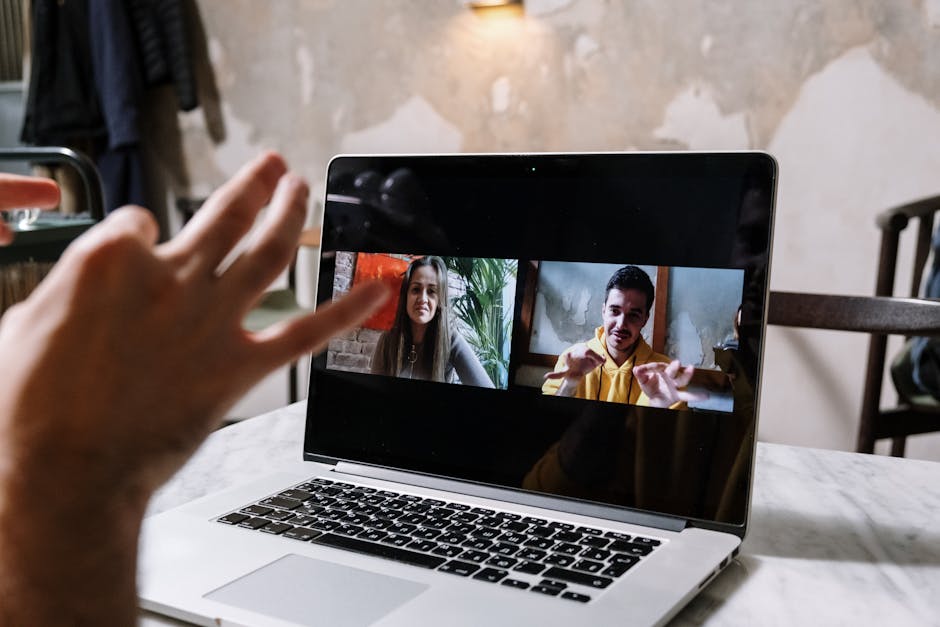
Zoom Recording Cleanup: Trim, Compress, and Re-encode for Sharing
Zoom's local and cloud recordings are large, low-bitrate, and have audio quirks. Here's the post-processing pipeline that produces shareable MP4s without quality loss.
Alex Thompson·May 8, 2026·8 min read
Why Zoom Recordings Need Post-Processing
Zoom records at modest bitrate (around 1-2 Mbps for 1080p), uses VBR encoding tuned for talking-head video, and adds an intro/outro frame that's usually unwanted. The output file plays everywhere but isn't optimized for any specific use.
If you're sharing the recording with clients, posting to YouTube, or archiving for a corporate library, the raw Zoom file usually needs:
Trimming the start (Zoom's "Recording started" notification, dead time before content begins)
Trimming the end (post-meeting chat that lingered)
Compression for sharing (Zoom's recordings are larger than they need to be)
Audio cleanup (Zoom's audio compression is aggressive; some restoration helps)
This post covers the practical post-processing pipeline. Our video compressor handles the encoding step.
For local recordings, multiple files may exist for the same meeting (speaker view, gallery view, audio-only, transcript). The default "video1.mp4" is the gallery view if it was selected during recording.
Quick Trim with FFmpeg
For trimming the start and end without re-encoding (instant, no quality loss):
CRF 26 produces files about 50% the size of Zoom's source with no perceived quality loss for talking-head content. Critical for email attachments under 25 MB.
For an hour of 1080p Zoom content:
Source
After CRF 22
After CRF 26
After CRF 28
380 MB
~280 MB
~150 MB
~85 MB
CRF 28 is acceptable for casual sharing. Below that (CRF 30+), text in screen-share segments starts looking blurry.
Some recordings need to remove specific speakers (privacy, redaction, contractual). Two approaches:
Audio mute only:
Extract audio to a track in Audacity or your DAW
Mute or replace specific speaker segments
Re-mux with the muted audio
Cut speaker entirely:
Identify the segments where the speaker appears
Cut those segments from the video timeline (DaVinci Resolve, Premiere)
Re-render
For redaction work, document what was removed in a separate notes file. Always keep an unredacted master.
Speaker View vs Gallery View
If you recorded "Speaker View" (one large person at a time), the file is one continuous shot of whoever spoke. Visual transitions are abrupt.
If you recorded "Gallery View," all participants are visible in tiles. Better for showing reactions, worse for focusing on the active speaker.
Many production workflows: record both. Use Speaker View as the master deliverable; Gallery View for B-roll moments showing reactions.
Common Issues
Audio out of sync: Zoom occasionally records audio with offset drift. Detect with ffprobe -i input.mp4 (check audio_start_time vs video_start_time). Fix with -vsync cfr flag in re-encode.
Recording starts mid-meeting: Zoom's local recording requires explicit start. Cloud recording has a setting for "auto-record from start of meeting." Use cloud recording for multi-host meetings where any host might forget to press Record.
File corrupted ("Convert recording" stuck): Zoom couldn't finalize the local recording. Use Zoom's "Convert Recording" tool from the support page, or extract usable bits with FFmpeg's recovery mode.
Video quality varies through recording: Zoom adapts video quality to network conditions. Recordings reflect what Zoom received, which varies by minute. There's no fix; the source quality is locked in.
Speaker view ends abruptly when speaker leaves: when the active speaker leaves, Zoom's recorded speaker view freezes briefly. Edit the cut in post.
Internal training recordings: trim, compress to CRF 24, captions on, share via internal Drive/SharePoint.
Sales pitch deliverables: trim opening dead time, light compression to CRF 22 to retain quality, deliver via WeTransfer.
Webinar replays for marketing: trim, captions on, compress to CRF 26, upload to YouTube Unlisted, embed in marketing site.
Court depositions or legal records: minimal processing (only trim), keep audio at maximum quality, include unedited master with redaction notes.
Conference talks: trim Q&A if appropriate, compress to CRF 22, upload to YouTube or Vimeo, captions for accessibility.
Pro Tip: Always keep the original Zoom recording. Post-processing is destructive (or at least lossy). If a client asks for an unedited version after you've delivered, you need the source.
Frequently Asked Questions
Why is my Zoom recording so much bigger than expected?
Zoom uses 1-2 Mbps for video which seems low. The bitrate is multiplied by duration; a 2-hour meeting at 1.5 Mbps is 1.3 GB. To shrink: re-encode at CRF 24-26.
Can I improve the video quality after recording?
No. Zoom's recording is the highest quality you have. Upscaling or AI enhancement (Topaz Video AI) can help slightly but can't recover information that wasn't captured.
What about the audio-only M4A file?
Zoom records audio as a separate M4A alongside the video. Useful for podcast publishing of a meeting; just take the M4A and skip the video processing entirely.
How do I split a Zoom recording into multiple files?
Cloud recordings include a transcript. Parse it for natural breaks (long pauses, speaker changes, topic shifts) and add chapter markers in post-production. M4B chapter format is similar; see M4B Audiobook Chapters.
Should I export to MP4 or WebM?
MP4 for broadest compatibility (universal). WebM is smaller for the same quality but has narrower support for older devices. For corporate sharing: MP4. For web embedding only: either works.
For Zoom recording cleanup: trim with -c copy for instant quality-preserving trim, re-encode at CRF 24-26 for sharing, drop to 720p for mobile-first audiences, normalize audio to -16 LUFS for voice clarity. Keep the unprocessed Zoom recording as your master. Our video compressor handles the compression step at consistent settings.
ZoomwebinarMP4video compressionremote work
About the Author
Alex Thompson
Software engineer and content creator focused on web technologies, image optimization, and developer tooling.